
“The greatest danger in times of turbulence is not the turbulence; it is to act with yesterday’s logic.” – Peter Drucker.
Market turbulence just does not happen. There is a catalyst, which is a surprise turn of events. There are daily investment surprises, the difference between expectations and realized results. A surprise creating market turbulence is more than just a micro surprise associated with a company but is a signal of a macro regime change.
Turbulence is an outlier for the set of relationships across all asset classes. It is not just higher volatility but a change in cross-market correlations and relationships. For example, it could be correlations going to one or a change in monetary policy that signals a macro shift in liquidity. The change occurs at a time of market extreme, as periods of high leverage or market views are tilted in the opposite direction that, causes significant portfolio rebalancing. The time length of the turbulence will depend on how fast the market can adjust portfolio holdings. A more uncertain cause will lead to a more extended period of turbulence. A more radical change will lead to a greater amplitude of turbulence.
A regime change means that the model of yesterday cannot be applied tomorrow. The linkages from the past regime no longer exist. Acting with an old model of reality will only increase the cost of turbulence. Acting with a new model will provide for turbulent profits.
Related Posts
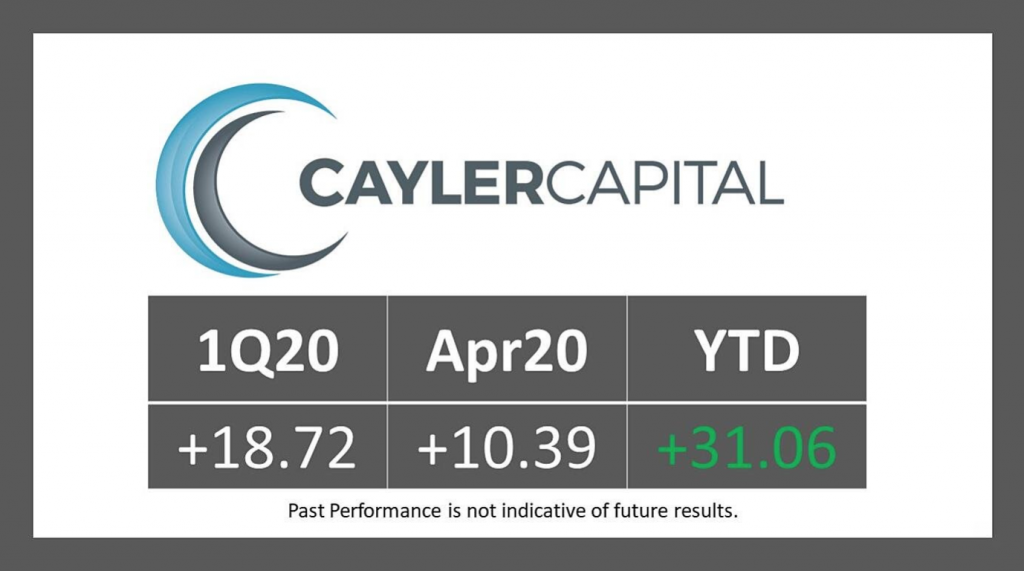
Cayler Capital | April Performance Commentary
After finishing off one of the wildest quarters of my trading career, April managed to take the cake. For those that missed it (not sure how you possibly could have), oil settled negative $37. The effects of this were immediate: risk barometers had to be recalculated, option models switched, and most importantly was the immediate […]

Mike Lombardi, football coaching and investing
I am not a football fanatic, but I picked up this book on a recommendation and was amazed by Lombardi’s insights on leadership and management. Mike Lombardi is long-time football executive and media analyst. The book focuses on Bill Belichick and the New England Patriots, but his conclusions could apply to any money management firm. A good money management firm is successful because it acts like a well-disciplined organization with a common purpose. That is no different than a competitively run sports organization. Lombardi finishes his book with five key recommendations for firm success that are worth presenting in bold.
“The Emeril Lagasse Theory” – Practical knowledge and culture is not often transferable
After hundreds of discussions with hedge fund managers, I am still surprised that there is a fear of revealing investment processes under the assumption that someone will steal their ideas and intellectual capital. There are few investment styles that are truly unique and special. What is special is still strategy execution – the practical process of delivering returns. Skill is with the decision-making execution of information and strategy.