
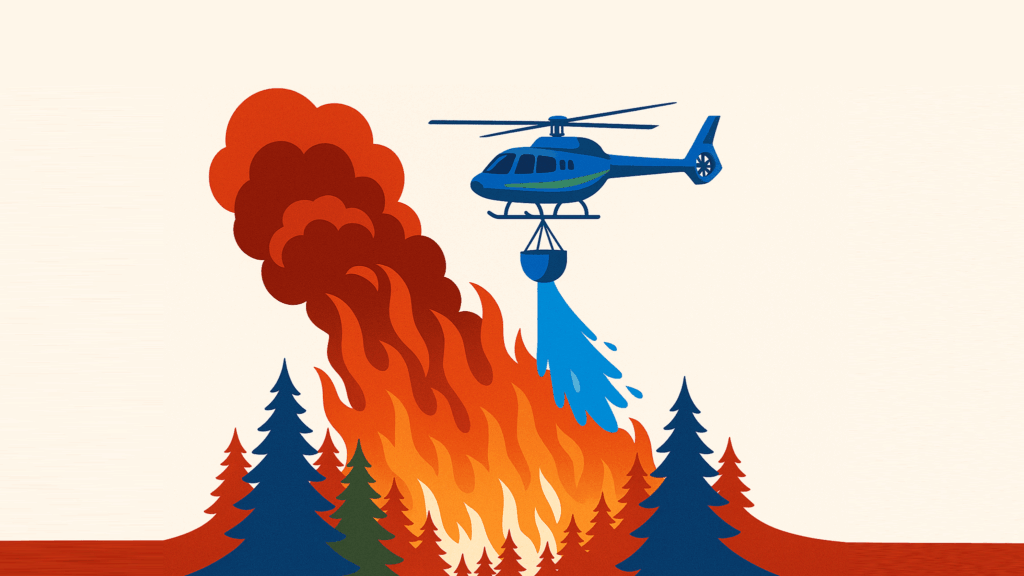
Proper forest management requires clearing dead brush, protecting high-risk areas, and conducting controlled burns. As January 2026 approaches, marking the one-year anniversary of the devastating Southern California wildfires that destroyed over 16,000 structures, we examine the mistakes made and how those lessons apply to the financial markets. Much like forest fires, risk can be mitigated but not eliminated. Our longstanding view that the delay in COVID-era bankruptcies would eventually materialize is now proving correct. The stress of higher interest rates, fading consumer spending, and persistent inflation drove corporate bankruptcy filings to a 15-year high in 2025. Here, we explore the drivers and what 2026 might hold.
Clearing Dead Brush: Allowing Economic Renewal
Natural selection plays its part in the animal kingdom and the business world. Stronger firms push out weaker competitors, allowing resources to be allocated to the winners. This includes employee talent, customers, and materials. Artificial stimulus, including low interest rates, provides a lifeline to companies on the edge. This creates an imbalance that inhibits the turnover needed for the efficient allocation of capital. The bankruptcies we see now extend from consumers/individuals to corporations. Pandemic stimulus led both to spend beyond sustainable levels, assuming low interest rates would persist. Auto loans, credit card debt, and much delayed student loan payments all contributed. Particularly concerning is the lagging effect of personal bankruptcies, which outpace business filings for now. This consumer stress is a leading indicator, as personal bankruptcies currently outpace business filings. It will take time to clear out all the dead wood, but the process is accelerating.
Protecting High-Risk Areas: Safeguarding the Financial System
The US banking system is linked to most of the largest financial crises in US history. Damage to this “plumbing” leads to bank runs, liquidity shortages, and exposes the deep vulnerability of the foundation of our economy. The most severe downturn of the Great Depression included 9,000 bank failures, followed by the second-largest contraction when the housing bubble burst in 2008. Massive liquidity stemmed the tide of cascading bank failures in the latter part of the year, but only after Lehman Brothers, insurer AIG, and Washington Mutual fell. This explains the immediate Federal Reserve response to the SVB Crisis, which included expanded lines of credit, additional FDIC coverage, and support for financial institutions to carry massive Treasury bond losses on their books until maturity.
The Pacific Palisades fire will lead to changes as well. Property damage of $40 billion is just one piece of damage done. AccuWeather estimates total costs of $250-$275 billion, which includes the cost of evacuation, supply chain disruptions, long-term economic costs, and more. This highlights the need for improved planning by the California government and forest management services. 2025 yielded few bank failures, which is a positive, but vigilance is key. Unlike uncontrolled wildfires, proactive Fed interventions have so far prevented widespread banking contagion.
Controlled Burns: Bankruptcy as an Economic Safety Valve
The 1988 Yellowstone fires burned over one-third of the entire park, consuming over 793,000 acres. Five years later, I drove through the park with my family and still saw miles of burnt forest. Despite a belief in controlled burns, dry conditions and windy weather that year pushed naturally occurring fires out of control. Today, satellite monitoring is buttressed by aerial reconnaissance, ground-based observation points on Mount Sheridan and Mount Holmes, as well as modern lighting-tracking systems. They still allow the natural process to take its course, but do much more to control and suppress potential danger spots.
Similarly, the bankruptcy system acts as a modern ‘controlled burn’ for the economy. By putting each debtor through a process where assets can be sold without duress, unsecured debt can be discharged (unless it is a student loan), and companies can reorganize or be purchased by a competitor to maintain as much value as possible. According to Matt Taunt, a bankruptcy attorney in Michigan, many of the largest filings occur in New York and Delaware. These courts move through complex cases quickly compared to other regions, making them the preferred choice for lawyers and their clients. First Brands Group, Rite Aid, and Spirit Airlines are just a few of the names going through the process now.
Looking Forward: Managing the Burn Into 2026
Growing numbers of bankruptcies in 2025 compared to 2024 show an accelerating trend. This puts pressure on the US Federal Reserve to lower interest rates to provide more breathing room. This is happening, but perhaps too late or not enough. This explains Trump’s displeasure with Jerome Powell, but at some point, fire will spread. It is better to keep it at a slow burn to protect the high-risk areas.
Illustration created by ChatGPT (OpenAI / DALL·E)
Related Posts
Iran, Venezuela, and the New Global Oil Order
Recent events remind us that balance in energy markets can be delicate. A conflict in the Middle East and the removal of a sitting President in Venezuela resulted in sharp moves across the energy industry in early 2026. Currently, the Iran War is creating havoc in crude shipments, affecting the world. While trouble in that […]
Decoding Metals Price Action
Markets often communicate more clearly through price action than through headlines. The dramatic surge in metals contracts is sending a powerful signal, but what exactly is it telling us? Traders frequently monitor inter-market relationships for early warnings. When one asset class moves unusually, it can ripple across the system or reveal deeper structural issues. In […]
2025 in Review: Markets, Policy, and the Path Forward
History never repeats itself, but it often rhymes. This is even more so the case this year, as Trump began his second term with similar but different disruptions to the markets. Rising stocks, normalizing inflation, and the AI boom took center stage. We discuss some of the key events below and try to anticipate where […]