
I have been a close follower of behavioral economics research. This broad research is insightful and has caused me to think deeper about how to make better decisions. It has certainly reinforced my belief that using algorithms to make decisions is preferable to relying on discretionary judgment. However, I have read a series of recent papers that have prompted me to take a closer look at some of the core behavioral beliefs established in this area. See the work of Dan Gal and Derek Rucker in the Journal of Consumer Psychology and the recent article in the Observation Section of https://papers.ssrn.com/sol3/papers.cfm?abstract_id=3049660
A core concept in behavioral economics regarding risky choices is that loss aversion has a significant influence on behavior. As simply put by the original authors, Dan Kahneman and Amos Tversky, “Losses loom larger than gains”. The relative pain from a loss is greater than the gain from winners, and this asymmetric view is more than just a function of risk aversion.
The disposition effect, driven by loss aversion, suggests that investors tend to hold onto losers and sell winners. It has become a bedrock behavioral view about investors and is a core reason why many managers have stop-losses in models to counteract this bias.
Now, we have research that calls into question loss aversion as the core reason for these effects, both from a theoretical and empirical perspective. There is clear evidence that contradicts loss aversion, but it has either been dismissed or ignored. Loss aversion is a description of behavior, not an explanation of it. This research does not offer an alternative to loss aversion, but instead provides a commentary on its usefulness and explanatory power.
This new research may not completely change minds on the importance of loss aversion, but it does suggest that loss aversion is a nuanced concept and should be employed with greater care. How we evaluate decision outcomes is very sensitive to a reference point that is often the status quo. The setup of the problem influences the results, suggesting that any general conclusions concerning loss aversion may be suspect.
According to Gal and Rucker,
“In general, it can be stated that the name ‘loss aversion’ represents exceptional branding from the perspective of enhancing the idea’s intuitive appeal, as everyone is essentially averse to losses (just as everyone is attracted to gains). This good branding might have led researchers to identify phenomena as being supportive of loss aversion, even though the phenomena, while involving losses, do not involve comparisons of the impact of losses relative to equivalent gains. As discussed in the previous section, examples include the sunk cost effect, the disposition effect, and others.”
This research is subtle and may not change an investor’s decision-making, but it is a testimony to careful thinking about problems. The obvious may not always be correct, and a straightforward narrative is not always applicable to a wide set of problems.
Do I worry about the pain from trading losses? Yes. Should I take extra steps to reduce downside “pain” more than what would be the case given my level of risk aversion (specifically account for loss aversion)? I am less sure. Accepting conceptual uncertainty can facilitate decision-making.
Related Posts
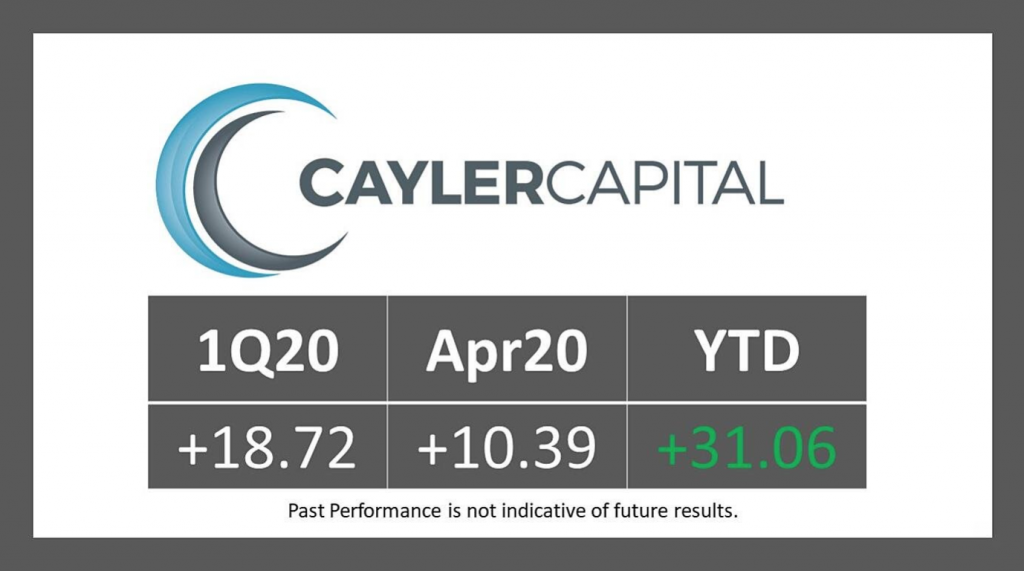
Cayler Capital | April Performance Commentary
After finishing off one of the wildest quarters of my trading career, April managed to take the cake. For those that missed it (not sure how you possibly could have), oil settled negative $37. The effects of this were immediate: risk barometers had to be recalculated, option models switched, and most importantly was the immediate […]

Mike Lombardi, football coaching and investing
I am not a football fanatic, but I picked up this book on a recommendation and was amazed by Lombardi’s insights on leadership and management. Mike Lombardi is long-time football executive and media analyst. The book focuses on Bill Belichick and the New England Patriots, but his conclusions could apply to any money management firm. A good money management firm is successful because it acts like a well-disciplined organization with a common purpose. That is no different than a competitively run sports organization. Lombardi finishes his book with five key recommendations for firm success that are worth presenting in bold.
“The Emeril Lagasse Theory” – Practical knowledge and culture is not often transferable
After hundreds of discussions with hedge fund managers, I am still surprised that there is a fear of revealing investment processes under the assumption that someone will steal their ideas and intellectual capital. There are few investment styles that are truly unique and special. What is special is still strategy execution – the practical process of delivering returns. Skill is with the decision-making execution of information and strategy.