Category: Commodities
The Relationship Between Financial or Real Assets is at Extremes – It Can Be Exploited
Correlation is not causality. Blending two variables on the same graph does not make a relationship, but there is a core link with the relationship between real and financial assets. Financial assets are related to the future ability of issuers to generate cash flows for dividends or for paying down debt. Growth in real assets are linked to the demand for resources to sustain current and future consumption.

Commodity Returns Over the Long-Run – A Good Diversifier, So Get Back in with an Asset Allocation
Commodity index investing has not been very successful for investors as measured by leading index total returns since the Great Financial Crisis. The end of the super-cycle has been tough on most investors and only recently has there been a period of extended positive returns based on the rise in oil prices. Is there any relief for investors?

What is Beta for Commodities? There are Big Differences
An investor may want to increase his commodity beta exposure to meet his strategic allocation target for this asset class. Unfortunately, all betas are not created equal in the commodity space. There is a wide difference in the choices that are available and this chasm is much greater than anything found in other asset classes.

Long/Short Commodity Funds – Adds Value to Equity and Bond Portfolios
Static investments in long-only commodity indices have had a checkered past since the financial crisis. With the end of the commodity super-cycle, there has been a long commodity unwind and passive investing in commodities has provided negative annualized returns for investors for years. There has not been any bounce to pre-crisis level like we seen in equities. The interest in commodities as an inflation hedge has waned with this poor performance.

Buying Commodities a Play on China Growth As Well As Inflation
We have previously posted the relationship between global growth and commodity returns as measured by the leading index (BCOM). Global growth above 3% is a good tailwind for overall commodity demand that will push prices higher.

Commodity Driven By Global Growth – Above 3% Growth and Prices Push Higher
Commodities are an effective way to hedge against inflation, but it can also be viewed as a simple way to play the global growth story. The average annual total return for the Bloomberg BCOM index (formerly the DJUBS commodity index) since 1992 has been 1.37% but if we look at returns when global growth is above 3%, the average annual return was 10.91%.
Looking Back Over Commodities for the Last Ten to Fifteen Years – Currently in Normalization Phase
Commodities have not behaved like other asset classes since the Financial Crisis. In spite of all the monetary easing and the lowering of interest rates, commodities have marched to their own drummer, or, put differently, the commodity cycle has been independent of the business, financial, or monetary cycles. It is because of this difference that commodity exposure may look more attractive than traditional assets.

Time For Commodities, But What Is The Right Choice? Think In Terms Of Risk Premiums
Inflation is a growing concern with many investors. Additionally, there is the perception that financial assets are overvalued. There is a need for diversification across other asset classes given the potential for stock-bond correlation rising in an inflationary environment.
Taking A Second Look At Gold During A Financial Crisis
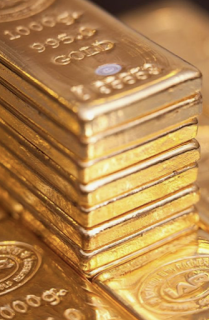
What would have protected investors during the turmoil of last week? With all of the major asset classes falling, not much. Declines were a just a matter of degree. There were some selected instruments that did well, but the “correlation to one” effect, albeit not absolutely true, kicked-in for many assets that were supposed to provide strong diversification. However, there was a protection instrument that did provide safety, gold. Although slightly under bond returns for the Barclay Aggregate index through the first twelve days of the month, it has generated gains for the year and certainty beat long-term Treasury bonds.

If Dollar Is Down, Investors Want To Look Toward Commodities
The dollar may be trending down, but investors should also look at the second order effects of what will happen to other markets. For example, a declining dollar is good for long commodity exposure. The long commodity argument is twofold, one, a decline in the dollar makes commodities denominated in dollars cheaper to foreign buyers which will increase demand; two, a decline in the dollar associated with global growth will increase global commodity demand. There are both substitution and income effects.

Commodity Return Dispersion Very Large – The Opportunity and Risk in This Sector
Volatility in commodities as measured by their dispersion in returns is high, so it is hard to characterize the behavior of the commodity sector. The periodic table of annual returns highlights the varied behavior of these markets. This list does not even include softs, tropicals, or livestock commodities and is tilted to the base metals; however, the story would still be the same.

Looking at Commodities from Both a Macro and Micro Perspective – Different Stories
The narrative for holding an allocation to commodities by looking through a macro factor lens may generate different conclusions than taking a micro market-specific perspective. While the macro perspective is good for setting longer-term strategic allocations, the micro perspective helps with tactical decisions on where or how to put money to work in commodities.

Commodities Versus Financial Assets – There is Value Here
Equities are overvalued! Bonds are overvalued! In the minds of many investors everything is overvalued given central bank distortions, yet there may be an exception. Look at commodities. The difference between financial and real asset could not be larger. Financial assets have steadily moved higher while commodities have fallen or at best moved sideways relative to risky stocks in the last 5+ years. This relationship has applied to all equity indices around the world to varying degrees.